No transcript available for this episode.
S01:E06
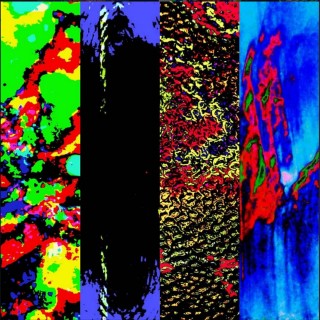
jw01621, exposure 00005, as it came off NIRSpec’s first detector. This one is named for hardware rather than for a grating: it is a detector-level product, the rawest-labelled cube in the series.
The programme runs the standard three movements — a fourteen-minute suite of the hundred most distinctive passages, ninety-three minutes of the open field at twenty-four minutes per reading, and a seven-minute close of the fifty rarest.
Its signature is obstruction. More than a fifth of the distinctive suite comes from that reading — the measure of how much each cell’s spectrum disagrees with its four neighbours — which is a way of saying this field is structurally disputed with itself more than most. The rare suite is one of the few here that draws on all seven readings, with the line reading heaviest.
Before Birth is an acknowledged test series.
A note on the silences: this piece runs quiet for 48m08s in total, the longest stretch 12m24s. Nothing is wrong with the file.
The silence is the recording. This is a translation of a JWST spectral cube — the engine sounds what the data does, not a continuous signal — so where the cube has nothing to report, nothing sounds.
These recur about every 24 minutes — once per traversal pass across the same empty band.